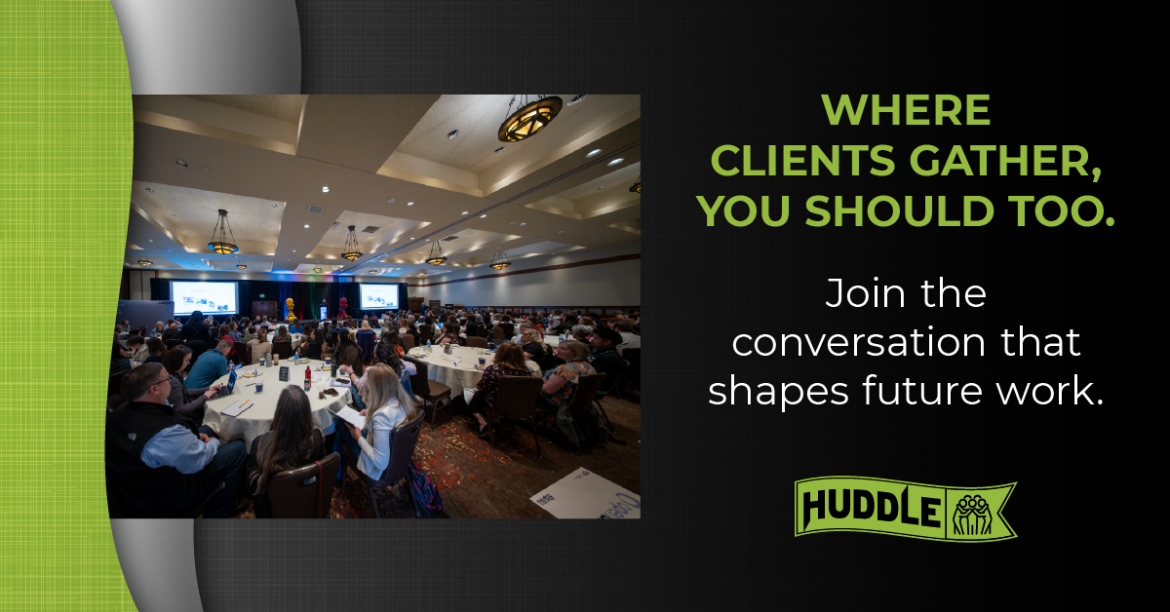

Professional associations aren’t just about logos on your email signature. In the AEC industry, client association involvement is one of the most strategic and authentic ways to build relationships, grow visibility, and stay close to what matters to your clients.
This September, HUDDLE focuses on how your team can get more out of association involvement—from choosing the right organizations to participating in meaningful ways that lead to trust and opportunity. Whether you’re looking to build a presence in new markets or deepen existing connections, showing up is the first step.
Why Association Involvement Still Matters
Relationships don’t start with a proposal—they often begin over coffee, at a panel discussion, or in a committee meeting. Active participation in client associations shows that your team is engaged, knowledgeable, and invested in the same outcomes your clients care about.
Strong involvement can help you:
- Stay ahead of trends and challenges in client industries
- Build genuine connections beyond sales conversations
- Create visibility for your team and your expertise
- Discover upcoming projects early through informal networks
- Earn trust by contributing before asking for anything in return
How to Make It Strategic
Choose the Right Organizations
Not every association is worth your time. Focus on the ones where your key clients and prospects are active. Look at who serves on the board, who attends events, and what types of programs they offer.
Get Beyond Attendance
Showing up is good, but participating is better. Encourage team members to join committees, speak on panels, or volunteer for events. These roles build credibility and make your presence more meaningful.
Be Consistent
Association involvement is a long game. Results don’t show up overnight. Commit to regular participation and encourage internal support for the time investment.
Track Relationships and Insights
Keep notes on who you meet, what you learn, and which events spark opportunities. This context becomes valuable during pursuits or when crafting messaging for proposals and interviews.
Support Emerging Leaders
Encourage junior staff to get involved early. Associations are a low-risk environment to develop leadership, networking, and speaking skills.
How AI Can Support the Process
AI tools can help you prepare for and get more value from association involvement, especially when time is limited:
- Research Speakers or Attendees
-
Use AI to quickly summarize a panelist’s background or a company’s latest news so your team walks into events informed and ready to engage.
-
Use AI to quickly summarize a panelist’s background or a company’s latest news so your team walks into events informed and ready to engage.
- Draft Follow-Up Emails
- AI can generate professional, personalized follow-ups after an event or committee meeting. Just input a few key takeaways, and it can help you sound polished and proactive.
- AI can generate professional, personalized follow-ups after an event or committee meeting. Just input a few key takeaways, and it can help you sound polished and proactive.
- Brainstorm Thought Leadership Ideas
- Want to propose a speaking topic or article for an association newsletter? Use AI to generate topic ideas or outline a pitch aligned with current trends.
- Want to propose a speaking topic or article for an association newsletter? Use AI to generate topic ideas or outline a pitch aligned with current trends.
- Organize Takeaways
- After events, AI tools can help turn raw notes into a summary with action items or insights that can be shared with your team or logged into your CRM.
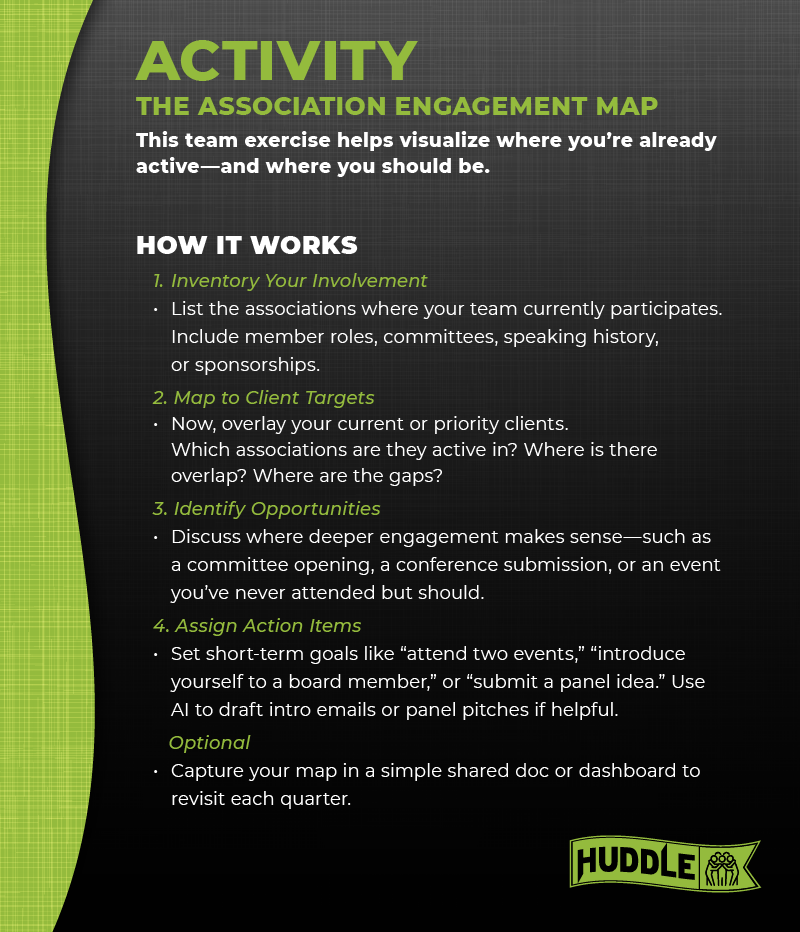
Join the September HUDDLE
Client association involvement isn’t just about visibility—it’s about values. It’s about showing up, contributing, and connecting with the people who drive your market forward.
This HUDDLE is a chance to rethink how your team approaches associations, to make your involvement more intentional, and to explore how AI can help you be more prepared, more present, and more strategic.
Because building trust starts long before the shortlist. Sometimes, it starts with simply being in the room.